What's Actually Inside Your Phone
You probably don't think about what your phone is made of. Most people don't. But there's a lot going on inside that little rectangle. Circuit boards contain lead. Screens use mercury. Batteries are packed with lithium and cobalt. The plastic casing is coated in brominated flame retardants to prevent fires. There's cadmium in the semiconductor chips.
When you're using the phone normally, all of this is safely sealed inside. The problem starts when the device gets thrown away and those materials start breaking free.
What Happens in a Landfill
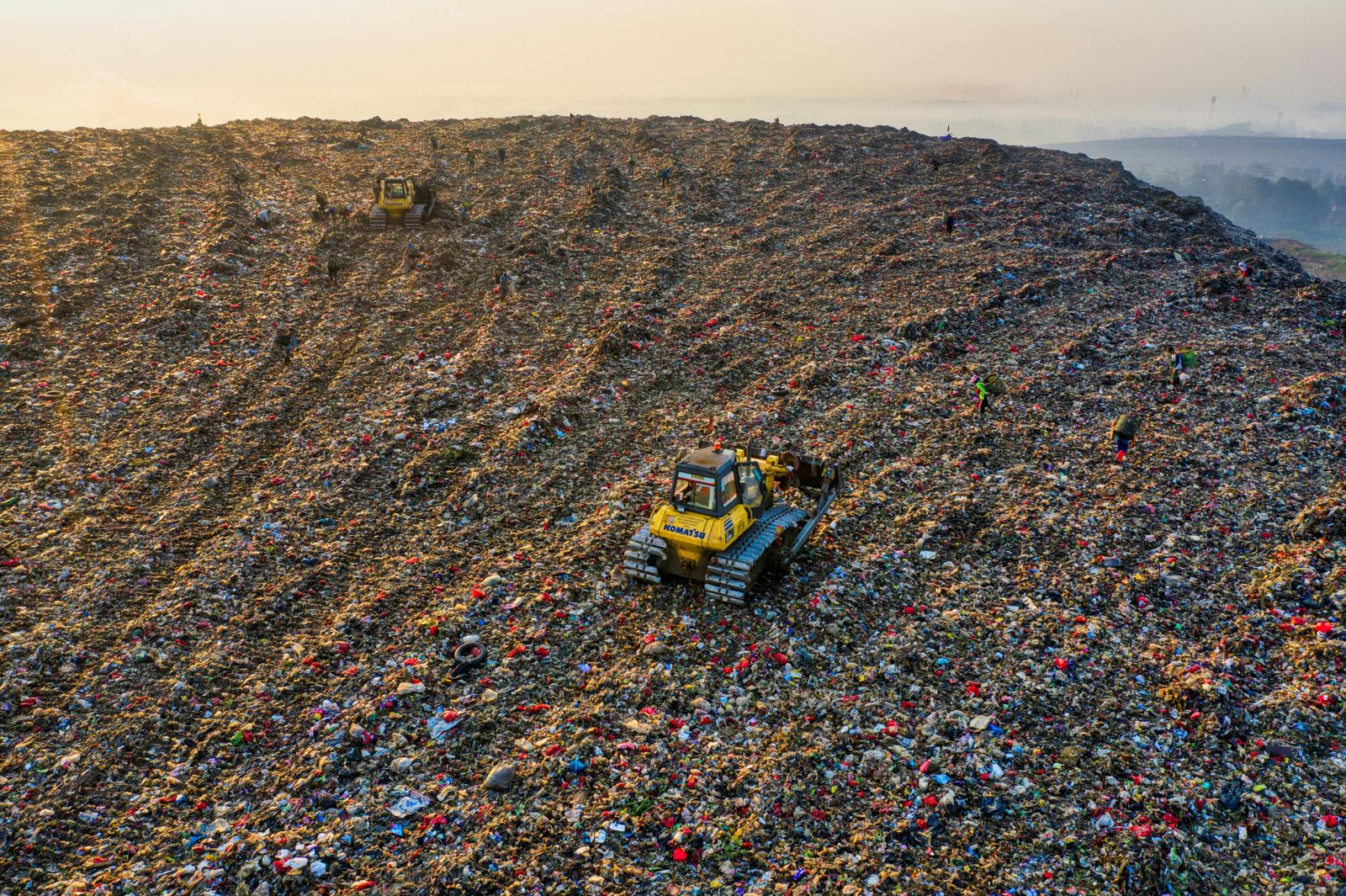
Electronics don't decompose like food scraps or paper. They sit there for decades, slowly breaking apart. And as they do, the toxic metals inside them start leaching out.
Here's how it works: rain falls on the landfill, water filters through the waste, and as it passes through old electronics, it picks up dissolved lead, mercury, and cadmium. That contaminated water — called leachate — eventually reaches the soil underneath and can seep into groundwater. The same groundwater that might feed local wells or irrigation systems.
The scary thing is that this process is slow and invisible. You can't see lead dissolving out of a circuit board. You can't smell mercury leaching from a screen. By the time anyone detects the contamination, it's usually already spread.
Open burning is even worse. In some places, people burn e-waste to reduce its volume or quickly extract metals like copper. When you heat electronic components, they release some of the most toxic substances environmental scientists know about — dioxins, furans, and polycyclic aromatic hydrocarbons. These don't just affect the immediate area. Wind carries them across entire regions.
The Health Effects Are Documented
This isn't speculation. The World Health Organization has spent years studying the health effects of e-waste exposure, and what they've found is pretty alarming.
Lead exposure, even in small amounts, has been linked to reduced cognitive function and behavioral problems in kids. Mercury damages the brain and nervous system. Cadmium builds up in your kidneys and liver over time and is classified as a carcinogen — meaning it can cause cancer.
A systematic review published in The Lancet Planetary Health looked at communities living near informal e-waste processing sites and found significantly elevated levels of heavy metals in residents' blood. The research connected chronic e-waste exposure to DNA damage, thyroid problems, weakened immune response, and complications during pregnancy including premature birth and low birth weight.
Kids are hit hardest. Their bodies are smaller, their organs are still developing, and they have habits — like putting their hands in their mouths — that increase their exposure to contaminated dust and soil. The WHO specifically identifies children and pregnant women as the most vulnerable populations when it comes to e-waste toxicants.
Where Azerbaijan Stands
Right now, Azerbaijan doesn't have e-waste recycling facilities that ordinary people can use. Most electronics that get thrown away end up in municipal landfills — and these landfills aren't designed to contain hazardous materials. There's no special lining to prevent toxic leachate from reaching the groundwater. There's no separation of electronic waste from regular household waste.
The government is making progress on waste management in general. The Extended Producer Responsibility framework is being strengthened, and new infrastructure is being planned for the liberated territories. But at the household level, right now, if you want to get rid of an old phone or a bag of dead batteries in Baku, there's almost nowhere to take them.
That's the gap we're working on. E-Waste Azerbaijan sets up collection points at schools and community locations specifically so people have an actual option besides the trash can. It's not a complete solution — Azerbaijan needs proper legislation and industrial-scale recycling — but it's a start.
Why "It's Just One Battery" Doesn't Work
I've heard this a lot. "It's just one battery, it can't make that much difference." But think about it this way: Azerbaijan has over 10 million people. If even a fraction of households throw away a few batteries and one old device per year through regular trash, you're looking at a massive amount of hazardous material quietly accumulating in landfills that were never built to handle it.
One lithium-ion battery, if it gets punctured or overheated in a landfill, can leak electrolyte and heavy metals into the surrounding soil. One old phone has enough toxic material to contaminate a meaningful patch of ground. Multiply that by hundreds of thousands of households, year after year, and the scale becomes hard to ignore.
The good news is that the solution is genuinely simple. Don't put electronics in the trash. Keep them separate. Bring them to a collection point. Tell someone else to do the same. The damage adds up over time — but so does the prevention.